Frozen Pipes in Cibolo, TX
Frozen Pipes in Cibolo TX: Can They Still Happen?
It is a fair question. Cibolo is not Minneapolis, and most winters here are mild. But that is exactly what makes a hard freeze so damaging — homes here are not built for sustained below-freezing temperatures the way homes in colder climates are.
The short answer is yes. Frozen pipes still happen in Cibolo, and when they do, they often burst. This guide explains why, which pipes freeze first, how to thaw them safely, and how to keep it from happening again.
Yes — and Here Is Why Cibolo Is Especially Vulnerable
Cibolo sits in a part of Texas where the climate is warm enough that plumbing is rarely built with deep freeze protection in mind. Supply lines are often run through attics, garages, and exterior walls with little to no insulation. Outdoor spigots are commonly uninsulated. When a hard freeze does arrive, those pipes are exposed.
It only takes a few hours at or below 20°F to freeze a pipe that is exposed to the outside air. And once ice forms, water behind it has nowhere to go. Pressure builds between the ice blockage and the closed faucet, and that pressure is what splits the pipe — not the ice itself.
The leak often does not appear until the ice thaws. That is why homeowners sometimes wake up to water spraying from a pipe that seemed fine the night before.
Yes, pipes still freeze in Cibolo. The region sees occasional hard freezes, and local homes are not built for them. The pipes most at risk are those in attics, garages, crawlspaces, exterior walls, and outdoor spigots.
If a pipe freezes: shut off the water, open the nearest faucet, and thaw gradually with warm air — never an open flame. If the pipe has already split and is leaking, shut off the main and call a plumber. For prevention steps, see the guide on burst pipe prevention tips for Cibolo TX homes.
The Pipes Most at Risk in a Cibolo Freeze
Not every pipe in your home carries the same risk. These are the locations that freeze first in Cibolo homes, roughly in the order a plumber would check them.
Outdoor Hose Bibs and Spigots
The most common freeze point in any Texas home. A hose left connected traps water against the valve, and the pipe behind the wall takes the pressure when it expands. Disconnect and cover these first.
Pipes in the Attic
Attic temperatures track outdoor temperatures closely. Supply lines running through an uninsulated attic are exposed to the full force of a hard freeze, and many Cibolo homes have at least one line up there.
Garage Supply Lines
Garages are usually unheated, and many Cibolo homes have water heaters, washing machine hookups, or hose bibs there. Any pipe running through a garage is at elevated risk during a freeze.
Pipes Along Exterior Walls
Kitchen and bathroom sinks on exterior walls often have pipes running through unheated cabinet space. These lines sit against the cold exterior sheathing and are among the first to freeze.
Crawlspace Lines
Homes with crawlspaces have plumbing running through an unconditioned space. Cold air pools under the floor, and any uninsulated line down there can freeze even when the rest of the house stays warm.
Fire Sprinkler and Irrigation Lines
Irrigation systems and any exterior fire sprinkler lines hold water in exposed locations. If they are not drained or blown out before a freeze, they can crack and leak when temperatures rise.
Shut Off the Water First. Then Call.
If a pipe has frozen and you suspect it has split, shut off the main water valve immediately. Thawing a split pipe without shutting off the water will release a spray the moment the ice clears. Once the water is off, call and describe what you are seeing.
Signs a Pipe Has Frozen
A frozen pipe is not always obvious. In many cases, the first sign is simply that water stops coming out of a fixture. These are the indicators to watch for during a freeze.
- No water at one or more fixturesA single dead faucet while others still work is the classic sign of a frozen line. The blockage is upstream of that fixture.
- Frost visible on an exposed pipeIf you can see frost or a white layer on a pipe in the attic, garage, or crawlspace, that section is frozen or close to it.
- Unusual smell from a drain or faucetA blocked pipe can trap sewer gas, which may back up into the home. A strange smell during a freeze is worth investigating.
- A pipe that feels unusually cold or bulgedRun your hand along exposed pipes. A section that is much colder than the rest, or that looks slightly swollen, may be frozen.
- Toilet tank not refillingIf the tank does not refill after a flush and the supply line is exposed, the line feeding the toilet may have frozen.
- Water appears when it thawsIf a fixture starts working again after a freeze and you notice a drip, spray, or puddle, the pipe split while frozen.
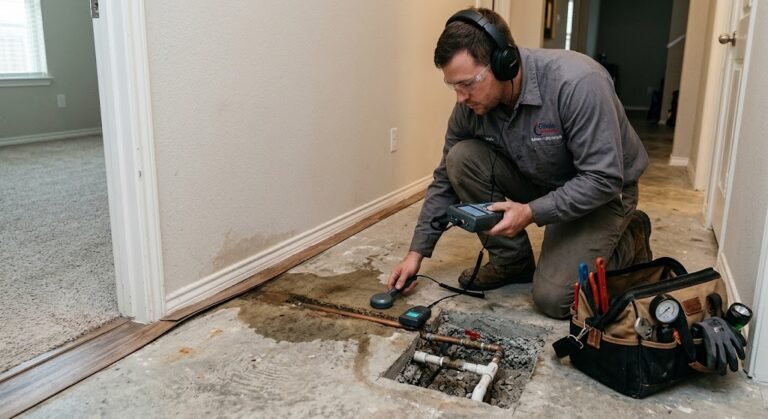
Related reading: if you already see water where it should not be, the guide on how to find a hidden water leak in your Cibolo home walks through the meter test and other checks. For detection tools plumbers use, see water leak detection in Cibolo TX.
How to Thaw a Frozen Pipe Safely
If a pipe has frozen but not yet split, thawing it carefully can prevent a burst. The key is gradual, gentle heat — never a flame, and never a sudden temperature change.
- 1 Shut off the main water valve If the pipe has already split, thawing without shutting off the water will release a spray. Shut off the main first — before you apply any heat.
- 2 Open the nearest faucet Open the fixture that the frozen pipe feeds. This gives melting water somewhere to go and relieves pressure as the ice thaws. Leave it open until flow returns to normal.
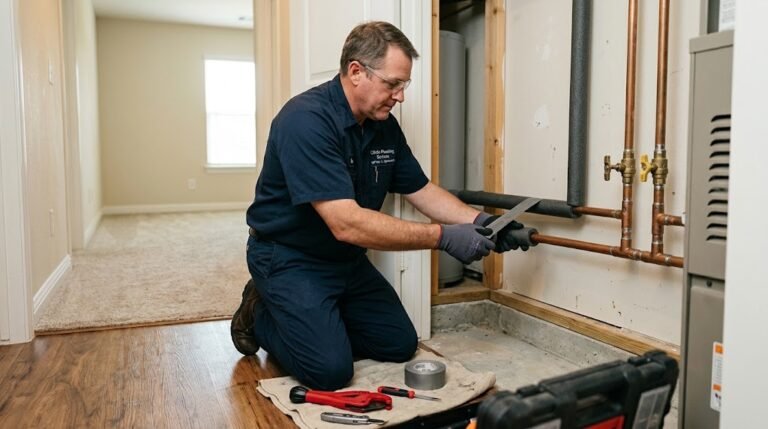
- 3 Apply gentle heat starting at the faucet end Work from the fixture back toward the frozen section. Use a hair dryer, a heat lamp, or warm towels. Keep the heat source moving — do not hold it in one spot.
- 4 Never use an open flame or boiling water A torch can ignite surrounding materials, and boiling water can crack the pipe from thermal shock. Slow and warm is the rule.
- 5 Watch for leaks as the ice clears Water expanding inside the pipe can split it even if it has not leaked yet. As the ice melts, check the pipe and surrounding area for drips or moisture. If you see any, shut off the water and call a plumber.
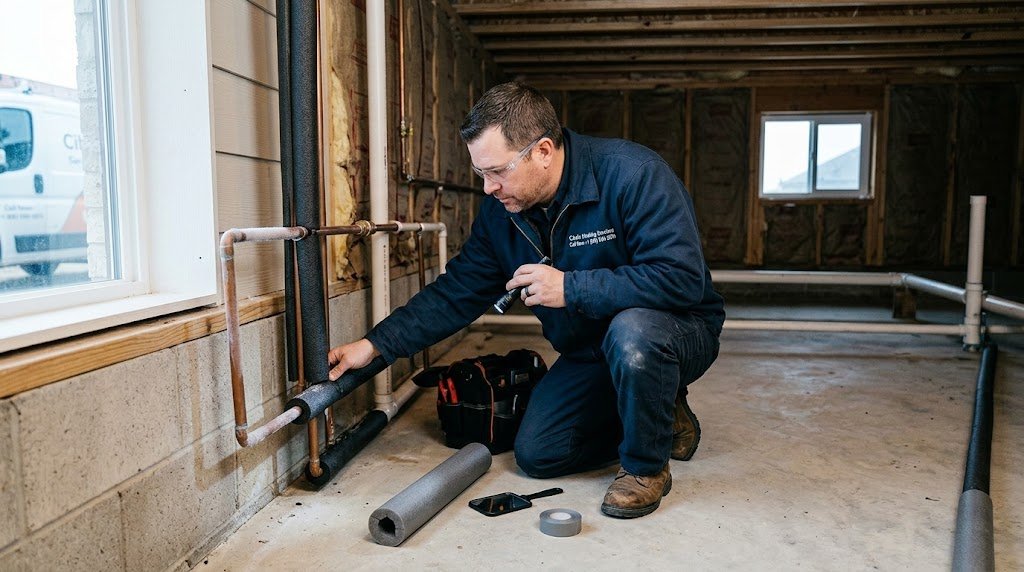
- 6 Insulate the pipe once it is thawed After the freeze passes, wrap the affected pipe with foam insulation. If it froze once, it will freeze again the next time temperatures drop. See the guide on burst pipe prevention tips for Cibolo TX homes for the full routine.
What Not to Do With a Frozen Pipe
A frozen pipe is not the time for quick fixes. These are the reactions that turn a frozen pipe into a burst pipe — or a burst pipe into a much bigger repair.
Do Not Use an Open Flame
A torch or lighter can ignite insulation, framing, or the pipe itself. Even if the pipe survives, the surrounding materials may not.
Do Not Pour Boiling Water on the Pipe
The sudden temperature change can crack a frozen pipe. Use warm — not boiling — water, and apply heat gradually and from the faucet end back.
Do Not Thaw Without Shutting Off the Water
If the pipe has split, thawing with the water on will release a spray the moment the ice clears. Shut off the main first, then thaw.
Do Not Use a Hammer or Chisel
Hitting a frozen pipe to break up ice will crack it. Ice is not the enemy — pressure between the ice and a closed faucet is. Open a faucet instead.
Do Not Leave Space Heaters Unattended
A space heater in an attic or crawlspace is a fire risk. If you use one, stay with it, keep it clear of combustibles, and never leave it running overnight.
Do Not Assume "It Worked Fine Last Year"
A pipe that survived one freeze can still fail the next time. Repeated freezing weakens joints and fittings over time, and the failure often happens on a later cold snap.
Frozen Pipes and Cibolo Homes
Cibolo sits in a climate where the plumbing is not built for deep cold. Supply lines often run through attics, garages, and exterior walls with minimal insulation, and outdoor spigots are commonly uninsulated. When a hard freeze does arrive, those exposures are what fail.
The region's expansive clay soil adds a second, year-round stress. As the ground swells and shrinks with moisture changes, buried service lines and slab-embedded pipe are put under constant movement. That does not cause a freeze, but it does mean the piping is already under strain when cold weather arrives.
Homes built decades ago with galvanized steel supply lines are especially vulnerable. Corrosion thins the pipe wall over time, and a hard freeze can be the event that pushes a weakened section over the edge. A plumber can assess the condition of the piping and recommend whether any sections should be replaced before winter.
Cibolo, TX
Primary Service AreaFrozen pipe repair, freeze preparation, and plumbing services for Cibolo homes and nearby communities.
View Service AreasFrozen Pipe FAQs for Cibolo Homeowners
Common questions about frozen pipes in Cibolo and what to do about them.
Water freezes at 32°F, but pipes exposed to wind and cold air can freeze even slightly above that. In practice, the risk becomes serious when temperatures stay at or below 20°F for several hours — which does happen in Cibolo during hard freezes. Pipes in attics, garages, and crawlspaces freeze first because they track outdoor temperatures more closely.
A frozen pipe typically stops water flow entirely at one or more fixtures while others still work. Low pressure usually affects the whole house and tends to come on gradually. If a single faucet goes dead during a freeze, that line has likely frozen. Check for frost on exposed pipes in the attic, garage, or crawlspace.
Sometimes, yes. If the ice has room to expand and the faucet was left open, the pipe may thaw without splitting. But you cannot know whether the pipe has already cracked until the ice clears. That is why it is safer to shut off the water and thaw gradually rather than wait and hope.
The repair cost depends on where the pipe froze and how accessible it is. A visible pipe in a garage or under a sink is straightforward. A pipe that split inside a wall, an attic, or under a slab involves detection, access, and restoration. The water damage is usually the larger cost, which is why prevention pays off.
Policies vary. Sudden and accidental water damage from a burst pipe is often covered, while the pipe repair itself may or may not be. Some policies have specific language about freeze damage, especially if the home was left unheated. Document the damage with photos, keep receipts, and contact your insurer to ask how they want the claim handled.
Call (830) 590-5970 to describe what you are seeing, or send a request through the Contact Us page. Mention whether a pipe has already burst, whether the water is shut off, and whether any electrical areas are affected. For help choosing a plumbing professional, see the guide on hiring a plumber in Cibolo TX.
Want Your Pipes Checked Before the Next Freeze?
Prevention is almost always cheaper than repair. A plumbing inspection can catch uninsulated pipe, high pressure, and exposed lines in the attic or garage before a freeze turns a small weakness into a burst pipe. If you have already noticed a dead faucet or a drip that appeared after a cold snap, do not wait.