Slab Leak Warning Signs in Cibolo, TX
Slab Leak Warning Signs for Cibolo TX Homeowners
A slab leak is one of the most serious plumbing problems a Cibolo homeowner can face. Because the leak is hidden beneath your concrete foundation, it can run for weeks or months before you notice anything. By then, the damage has already started.
This guide covers the warning signs every homeowner should know, why Cibolo's soil conditions make slab leaks more common, how detection works, and what to do if you suspect a leak under your home.
Why Slab Leaks Are Common in Cibolo
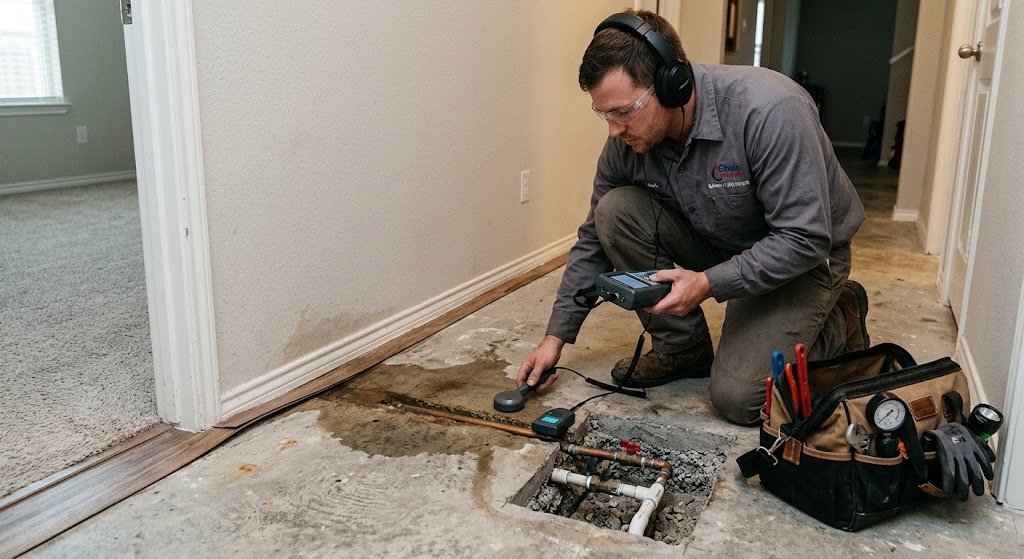
Cibolo sits on expansive clay soil that swells when wet and shrinks during dry spells. That constant movement puts stress on the pipes embedded beneath slab foundations, eventually leading to cracks or separations[reference:0]. The region's hot, humid summers and occasional hard freezes add to the pressure[reference:1].
Many Cibolo homes were built in the 2000s and later on slab foundations. While modern piping is generally durable, a supply line under the slab can fail regardless of the home's age, and soil movement in this region can affect newer and older homes alike [reference:2].
Signs of a slab leak include warm or damp spots on the floor, unexplained increases in your water bill, the sound of running water when all fixtures are off, cracks in walls or foundation, low water pressure, and musty odors or visible mold.
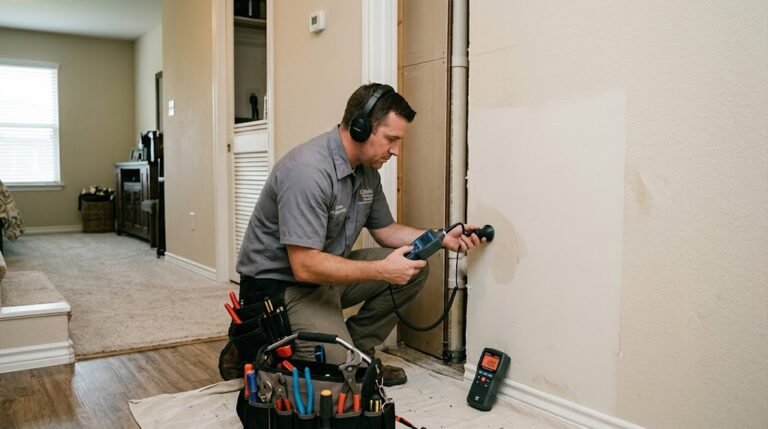
What to do: First, confirm the water meter is moving with everything off. If it is, call a plumber. Professional slab leak detection uses acoustic listening, thermal imaging, and pressure testing to locate the leak without unnecessary demolition.
For a broader overview of leak detection, see the article on water leak detection in Cibolo TX.
Warning Signs of a Slab Leak
These are the most common indicators homeowners in Cibolo report before a slab leak is confirmed. One sign alone may not mean a leak, but two or more together warrant immediate attention.
Unexplained Increase in Water Bill
A sudden spike in your monthly water usage without a corresponding change in habits is often the first and most reliable indicator of a hidden leak[reference:3]. Even a slow drip can waste hundreds of gallons per month.
Warm or Damp Spots on the Floor
A leak in a hot water line can create noticeable warm spots on your flooring. Cold water leaks manifest as damp patches, persistent wetness on carpets, or discoloration on tile grout and floorboards[reference:4].
Sound of Running Water When Nothing Is On
If you can hear water running when all faucets, toilets, and water-using appliances are turned off, it is a strong sign that water is flowing somewhere it should not be [reference:5]. A faint, continuous trickle under the floor is one of the most reliable signs[reference:6].
Cracks in Walls or Foundation
As water saturates the soil beneath your slab, it can cause the foundation to shift or heave. This movement can lead to new cracks appearing in interior walls, exterior brickwork, or the slab itself[reference:7].
Low Water Pressure Throughout the Home
A significant leak in a main water line will divert water flow, resulting in a noticeable drop in water pressure throughout your entire home[reference:8]. If pressure dropped suddenly, treat it as a possible slab leak.
Musty Odors or Visible Mold
The persistent moisture from a slab leak creates an ideal environment for mold and mildew growth. You might notice a musty smell or see visible growth along baseboards or under flooring[reference:9]. A musty odor or visible mold on floors or walls may indicate water seeping up from below[reference:10].
Get a Professional Slab Leak Assessment
If your water bill is climbing, the meter is moving, or you feel unexplained warm or damp spots on your floor, do not wait. A plumber can confirm whether there is a slab leak and locate it without unnecessary demolition. Early detection saves money and prevents structural damage.
How Slab Leak Detection Works
Modern slab leak detection is precise and minimally invasive. Plumbers use a combination of tools to locate the leak without tearing up your floors. Here is what the process typically involves.
- Meter testWith all fixtures off, the plumber watches the meter to confirm whether water is moving through the system.
- Acoustic listening devicesUltra-sensitive microphones detect the distinct sound of water escaping from a pressurized pipe under concrete, pinpointing the leak's location within inches[reference:11].
- Thermal imaging camerasInfrared cameras map temperature changes through the slab. Hot water leaks create warm pathways, and cold water leaks create cool zones, revealing the leak's path under finished floors[reference:12].
- Electronic line tracingA harmless electrical signal is applied to the pipe, and a receiver above the slab traces its exact path, helping plumbers focus detection tools accurately[reference:13].
- Pressure testing and isolationSections of the plumbing system are isolated and pressurized. A drop in pressure confirms which line is failing and narrows down the leak's location[reference:14].
- Visual inspection of accessible areasPlumbers check under sinks, around water heaters, in crawlspaces, and at hose bibs for obvious drips or corrosion.
Related reading: for a broader overview of leak detection methods, see the guide on water leak detection in Cibolo TX. If the issue involves a water heater rather than a slab leak, the article on water heater repair or replacement explains how to decide between fixing and replacing the unit.
How to Reduce Your Risk of a Slab Leak
Not every slab leak can be prevented, but these steps reduce the risk and help you catch problems earlier.
- 1 Watch your water bill every month A sudden jump with no change in habits is the earliest sign of a hidden leak. Set a reminder to check the bill when it arrives.
- 2 Check the water meter before bed Turn everything off, note the meter reading, and check it again in the morning before anyone uses water. If it moved, there is a leak somewhere.
- 3 Monitor for warm spots on floors A patch of tile, vinyl, or laminate that is noticeably warmer than the surrounding floor, sometimes only a foot or two across, usually sits over a leaking hot water supply line[reference:15].
- 4 Have your water pressure checked Pressure that is too high stresses joints and fittings. A plumber can test the pressure and check whether the pressure regulator is working correctly.
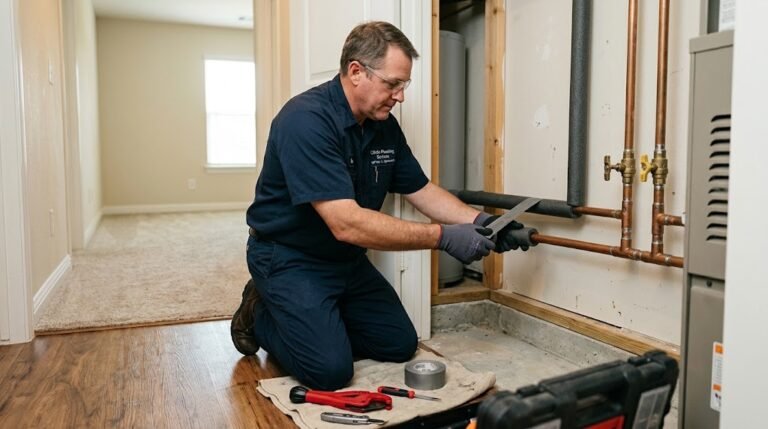
- 5 Insulate exposed pipes Pipes in garages, attics, and along exterior walls are vulnerable to freezing. Insulation reduces the risk of a split pipe that later leaks[reference:16].
- 6 Schedule periodic plumbing inspections A plumber can spot early signs of corrosion, loose fittings, or failing components before they turn into slab leaks. See the guide on how often Cibolo homes should have plumbing inspected for recommended intervals.
What Not to Do When You Suspect a Slab Leak
A suspected slab leak is not the time for guesswork. These common mistakes can make the situation worse or lead to unnecessary damage.
Do Not Ignore It and Hope It Stops
Slab leaks do not fix themselves. A small leak can erode the soil supporting your foundation, leading to sinking, cracking, or failure. The longer it runs, the more damage it causes.
Do Not Start Cutting Into the Slab
Without knowing the exact location, breaking into the concrete is wasteful and destructive. Professional detection tools locate the leak first, so repairs are targeted and minimal.
Do Not Use Stop-Leak Products as a Fix
Pour-in sealants can temporarily slow a leak, but they do not repair the pipe. They can also clog fixtures and make the eventual repair more difficult.
Do Not Assume It's Just the Toilet
A running toilet is a common cause of high water bills, but it is not the only one. If the meter still moves after checking the toilet, the leak is likely under the slab.
Do Not Delay Calling a Plumber
The longer a slab leak runs, the more damage it causes. If you have confirmed the meter is moving with everything off, call for professional help the same day.
Do Not Ignore Musty Smells or Mold
Persistent damp odors or visible mold growth along baseboards or under flooring often indicate moisture coming from below. Mold poses a health risk and will not resolve until the leak is fixed.
Slab Leak Detection for Cibolo Homes
Cibolo's expansive clay soil shifts with seasonal moisture changes, placing constant stress on slab foundations and the pipes running beneath them[reference:17]. This makes slab leaks a real concern for homeowners in the area, regardless of the age of the home.
If your home was built more than 20 years ago, or if you have noticed any of the warning signs above, a slab leak assessment is a practical next step. It is faster and less invasive than waiting for visible damage to appear.
Cibolo, TX
Primary Service AreaSlab leak detection and plumbing services for Cibolo homes and nearby communities. Local conditions, local experience.
View Service AreasSlab Leak FAQs for Cibolo Homeowners
Common questions about slab leaks and what to do next.
The most reliable sign is a water meter that continues to move when every fixture in the house is off. Other indicators include an unexplained increase in your water bill, warm or damp spots on the floor, the sound of running water when nothing is on, cracks in walls or foundation, low water pressure, and musty odors or visible mold.
Yes. A supply line under the slab can fail regardless of the home's age, and soil movement in the Cibolo region can affect newer and older homes alike. Warm floor spots and unexplained water bills are worth investigating rather than dismissing because the house is new[reference:18].
Slab leak repair costs vary widely based on the complexity of detection, the chosen repair method, and the extent of any secondary water damage. Across Texas, slab leak repairs typically range from $630 to $4,400, with costs reaching as high as $6,750 for severe cases[reference:19]. In the Cibolo area, concrete slab repair alone typically ranges from $500 to $2,500[reference:20].
Policies vary. A Texas homeowners policy usually treats a slab leak as three separate questions: the failed pipe itself, the tear-out needed to reach it, and the water damage it caused. The pipe repair is usually excluded as maintenance, the resulting water damage is generally covered when the release was sudden and accidental, and the cost to open and restore the slab to reach the line is often covered[reference:21]. Document the damage with photos, keep receipts, and contact your insurer to ask how they want the claim handled.
Call (830) 590-5970 to describe what you have noticed, or send a request through the Contact Us page. Mention whether the water meter is moving, whether you have felt any warm or damp spots on the floor, and whether the water bill has changed. For help choosing the right plumbing professional, see the guide on hiring a plumber in Cibolo TX.
Think You Have a Slab Leak?
Do not wait for a stain to appear on the ceiling or for your foundation to crack. If the meter is moving with everything off, or if you have noticed any of the warning signs above, a professional slab leak assessment is the fastest way to find the source and stop the damage.