Water Leak Detection in Cibolo, TX
Water Leak Detection in Cibolo TX: What Homeowners Should Know
A hidden water leak can waste thousands of gallons, spike your utility bill, and quietly rot the structure of your home. In Cibolo, where clay soils shift and temperatures swing, leaks are more common than many homeowners realize.
This guide explains the warning signs of a hidden leak, how detection works, what you can check yourself, and when to call a plumber for professional leak detection in Cibolo.
Why Hidden Water Leaks Matter in Cibolo
Cibolo sits on expansive clay soils that swell when wet and shrink when dry. That constant movement stresses buried water lines and slab-embedded pipes. Add occasional hard freezes and aging infrastructure in older neighborhoods, and the conditions for hidden leaks are present year-round.
The problem with most leaks is that they do not announce themselves. A pinhole leak inside a wall or under a slab can drip for weeks before you notice a stain, a smell, or an unexplained bill. By then, moisture has already reached framing, insulation, and flooring.
Signs of a hidden water leak include unexplained increases in your water bill, a water meter that moves when all fixtures are off, damp spots on walls or floors, musty odors, the sound of running water when nothing is on, and reduced water pressure.
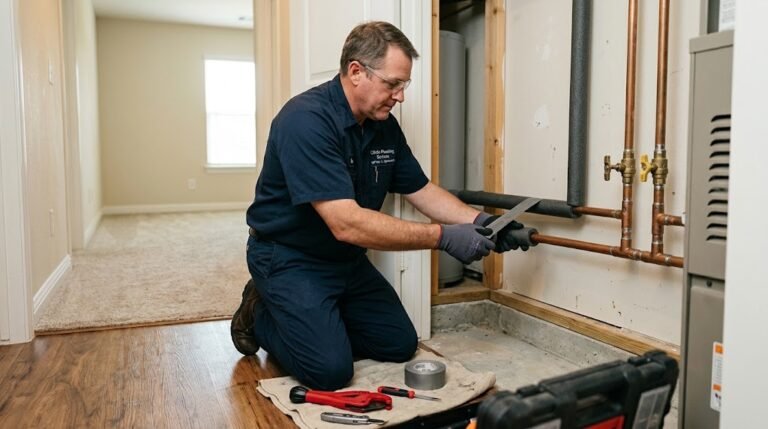
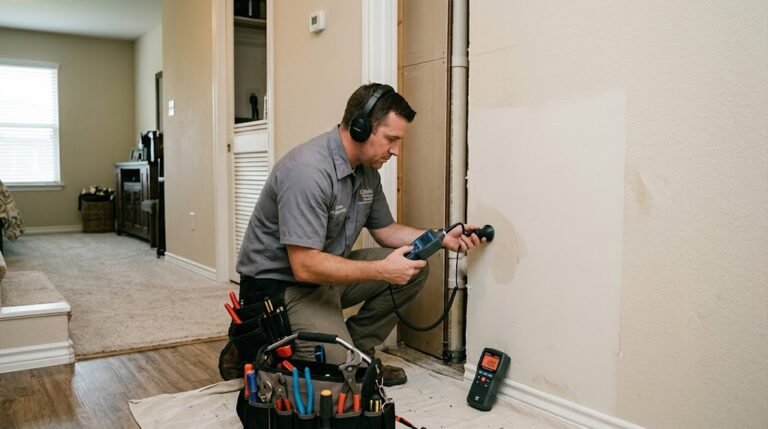
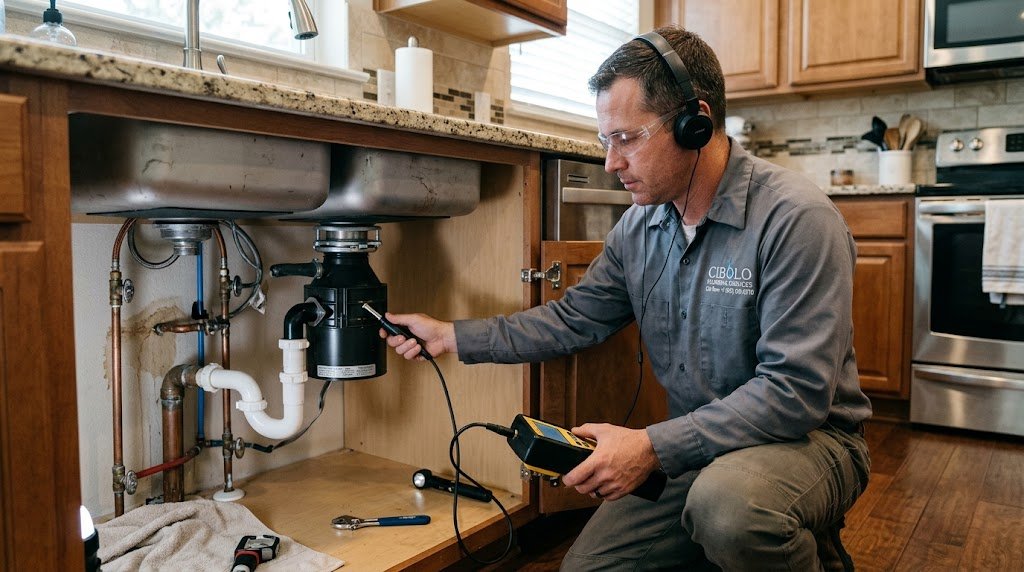
What to do: First, confirm the meter is moving with everything off. Then check visible pipes and fixtures for drips. If you cannot find the source, call a plumber. Professional leak detection uses acoustic listening, thermal imaging, and pressure testing to locate leaks without tearing into walls or floors.
For a related guide on what to do when a pipe actually breaks, see the article on emergency plumbing in Cibolo TX.
Warning Signs of a Hidden Water Leak
These are the most common indicators homeowners in Cibolo report before a leak is confirmed. One sign alone may not mean a leak, but two or more together warrant a closer look.
Unexplained Increase in Water Bill
A leak that has not reached a visible surface still shows up on the meter. If your usage has climbed without any change in habits, it is worth investigating. Even a slow drip can waste hundreds of gallons per month.
Water Meter Moves With Everything Off
Turn off every fixture in the house and watch the water meter. If the dial or digital display is still moving, water is escaping somewhere in the system. This is one of the most reliable signs of a hidden leak.
Damp Spots on Walls, Ceilings, or Floors
Discoloration, bubbling paint, or a soft spot in drywall often means moisture is coming from a pipe inside the wall or above the ceiling. Do not ignore a stain that grows over time.
Musty or Earthy Smell Indoors
Persistent damp odors with no obvious source can point to a slow leak behind a wall or under a floor that has been wet for a while. Mold and mildew follow moisture, and the smell is often the first thing homeowners notice.
Sound of Running Water When Nothing Is On
If you hear water moving through the pipes with no fixtures running, a leak is likely. This is common with toilet flappers, but it can also indicate a pipe leak. Listen carefully near walls and floors.
Reduced Water Pressure
A restriction or leak upstream can reduce flow to the whole house. If pressure dropped suddenly, treat it as a possible break. If it declined gradually, a slow leak or buildup may be the cause. See our guide on low water pressure in Cibolo for more.
Stop Guessing. Get a Professional Leak Assessment.
If your water bill is climbing, the meter is moving, or you smell dampness you cannot explain, a plumber can confirm whether there is a leak and locate it without unnecessary demolition. Early detection saves money and prevents structural damage.
How Water Leak Detection Works
Leak detection is not guesswork. Plumbers use a combination of tools and techniques to narrow down the location without opening every wall. Here is what the process typically involves.
- Meter testWith all fixtures off, the plumber watches the meter to confirm whether water is moving through the system.
- Acoustic listeningSpecialized microphones amplify the sound of water escaping from a pipe, helping pinpoint the leak underground or inside a wall.
- Thermal imagingInfrared cameras detect temperature differences caused by moisture behind walls, under floors, or above ceilings.
- Pressure testingThe plumbing system is isolated and pressurized. A drop in pressure indicates a leak on that section of pipe.
- Dye testingFor toilet leaks or drain leaks, dye is added to the tank or fixture. If color appears where it should not, the leak is confirmed.
- Visual inspection of accessible areasPlumbers check under sinks, around water heaters, in crawlspaces, and at hose bibs for obvious drips or corrosion.
Related reading: if the issue turns out to be a water heater problem rather than a pipe leak, see the guide on water heater repair or replacement. For questions about when to schedule a general plumbing inspection, the article on how often Cibolo homes should have plumbing inspected covers recommended timelines.
How to Prevent Hidden Water Leaks
Not every leak can be prevented, but these steps reduce the risk and help you catch problems earlier.
- 1 Watch your water bill every month A sudden jump with no change in habits is the earliest sign of a hidden leak. Set a reminder to check the bill when it arrives.
- 2 Check the water meter before bed Turn everything off, note the meter reading, and check it again in the morning before anyone uses water. If it moved, there is a leak somewhere.
- 3 Insulate exposed pipes Pipes in garages, attics, crawlspaces, and along exterior walls are vulnerable to freezing. Insulation reduces the risk of a split pipe that later leaks.
- 4 Fix dripping faucets and running toilets promptly A running toilet can waste hundreds of gallons per day. A dripping faucet may be a sign that a valve or seal is failing elsewhere in the system.
- 5 Have your water pressure checked Pressure that is too high stresses joints and fittings. A plumber can test the pressure and check whether the pressure regulator is working correctly.
- 6 Schedule periodic plumbing inspections A plumber can spot early signs of corrosion, loose fittings, or failing components before they turn into leaks. See the guide on how often Cibolo homes should have plumbing inspected for recommended intervals.
What Not to Do When You Suspect a Leak
A suspected leak is not the time for guesswork. These common mistakes can make the situation worse or lead to unnecessary damage.
Do Not Ignore It and Hope It Stops
Water leaks do not fix themselves. A small drip can become a burst pipe, and the moisture damage continues to spread even when the leak is slow.
Do Not Start Cutting Into Walls
Without knowing the exact location, cutting into drywall is wasteful and messy. Professional detection tools locate the leak first, so repairs are targeted.
Do Not Use Stop-Leak Products as a Fix
Pour-in sealants can temporarily slow a leak, but they do not repair the pipe. They can also clog fixtures and make the eventual repair more difficult.
Do Not Dig in the Yard Blindly
If you suspect a buried line, do not dig without knowing where gas, electrical, and irrigation lines run. This is a job for a professional with locating equipment.
Do Not Assume It's Just the Toilet
A running toilet is a common cause of high water bills, but it is not the only one. If the meter still moves after checking the toilet, the leak is elsewhere.
Do Not Delay Calling a Plumber
The longer a leak runs, the more damage it causes. If you have confirmed the meter is moving with everything off, call for professional help the same day.
Leak Detection for Cibolo Homes
Cibolo's soil conditions and temperature swings create specific challenges for plumbing systems. Clay soil movement can stress buried lines, and hard freezes can split pipes that later leak when they thaw. Homes with older galvanized steel piping are also more susceptible to corrosion-related leaks.
If your home was built more than 20 years ago, or if you have noticed any of the warning signs above, a leak detection assessment is a practical next step. It is faster and less invasive than waiting for visible damage to appear.
Cibolo, TX
Primary Service AreaLeak detection and plumbing services for Cibolo homes and nearby communities. Local conditions, local experience.
View Service AreasWater Leak Detection FAQs
Common questions from Cibolo homeowners about finding and fixing hidden leaks.
The most reliable sign is a water meter that continues to move when every fixture in the house is off. Other indicators include an unexplained increase in your water bill, damp spots on walls or floors, a musty smell indoors, the sound of running water when nothing is on, and reduced water pressure.
You can perform the meter test and check visible pipes and fixtures for drips. If the meter is moving and you cannot find a visible source, the leak is likely hidden inside a wall, under a slab, or in a buried line. That is when professional detection tools are needed to locate it without unnecessary demolition.
The cost has two parts: the water itself and the damage. A slow leak can waste hundreds to thousands of gallons per month. Structural damage from prolonged moisture — rotted framing, mold remediation, and flooring replacement — can cost far more than the leak repair itself. Early detection is almost always cheaper.
Plumbers use acoustic listening devices to hear water escaping from pipes, thermal imaging cameras to detect temperature differences caused by moisture, pressure testing to isolate sections of the system, and dye testing for toilet or drain leaks. The combination of tools depends on where the leak is suspected to be.
Policies vary. Sudden and accidental water damage from a pipe leak is often covered, while the pipe repair itself may or may not be. Damage from a leak that has been ongoing for weeks or months is sometimes excluded as a maintenance issue. Document the damage with photos, keep receipts, and contact your insurer to ask how they want the claim handled.
Call (830) 590-5970 to describe what you have noticed, or send a request through the Contact Us page. Mention whether the water meter is moving, whether you have seen any visible moisture, and whether the water bill has changed. If you are not sure whether you need a plumber or an emergency response, the guide on hiring a plumber in Cibolo TX explains how to choose the right service.
Think You Have a Hidden Leak?
Do not wait for a stain to appear on the ceiling or a bill to double. If the meter is moving with everything off, or if you have noticed any of the warning signs above, a professional leak assessment is the fastest way to find the source and stop the damage.