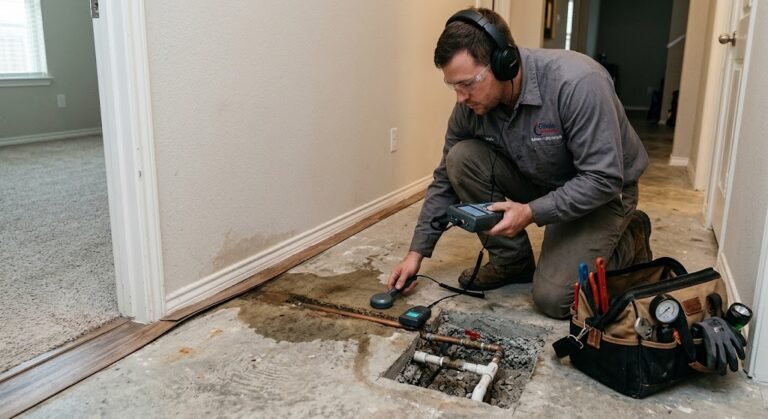
Drain Help for Cibolo Homeowners
Why Does My Drain Keep Clogging in Cibolo, TX?
A drain that clogs once is annoying. A drain that clogs repeatedly is telling you something. When the same sink, shower, or toilet backs up again a few weeks after you cleared it, the clog was never fully removed — or there is a bigger restriction further down the line that needs to be addressed.
This guide covers the most common reasons drains keep clogging in Cibolo homes, what you can safely check yourself, when a home remedy makes things worse, and when the pattern points to a professional drain cleaning or sewer issue.
The Short Answer
Drains that keep clogging usually fall into one of two categories. Either something is being put down the drain that should not be there, or there is a restriction deeper in the pipe that a plunger or chemical cleaner cannot reach.
If only one drain clogs repeatedly:
- Grease, soap scum, or food particles are coating the inside of the pipe.
- Hair and soap are building up in a bathroom drain.
- The P-trap (the curved section of pipe under the sink that holds water and keeps sewer gas out) is partially blocked.
- The fixture's pop-up stopper or the pipe just past it is catching debris.
If several drains clog at once, or the same drain keeps clogging after cleaning:
- The main drain line or sewer line may have a partial blockage.
- Tree roots may have entered a buried sewer line.
- Mineral scale may have narrowed older piping.
- The pipe may have a low spot, a belly, or a break where debris accumulates.
The pattern matters more than the individual clog. One slow drain is usually a local problem. Multiple slow drains at the same time almost always point to the main line.
Match the Pattern to the Likely Cause
The number of drains affected and the timing of the clogs tell you most of what you need to know. Use this as a starting point before calling a plumber.
| What You Notice | Likely Cause | Suggested Next Step |
|---|---|---|
| One bathroom sink clogs every few weeks | Hair, soap scum, or toothpaste residue in the P-trap | Clean the pop-up stopper and P-trap |
| Kitchen sink clogs slowly over time | Grease and food particles coating the pipe walls | Avoid grease down the drain; professional cleaning |
| Shower drains slowly no matter what | Hair mixed with soap buildup at the strainer or trap | Remove strainer, clear hair, consider professional cleaning |
| Same drain re-clogs right after cleaning | Restriction further down the branch line | Professional drain cleaning or camera inspection |
| Multiple drains slow at the same time | Partial main line or sewer line blockage | Sewer camera inspection recommended |
| Toilet gurgles when sink or tub drains | Venting issue or main line restriction | Professional diagnosis |
| Drains back up into tub or shower | Main line blockage downstream of those fixtures | Stop using water; call a plumber promptly |
| Recurring clogs on an older home | Pipe scale, corroded cast iron, or root intrusion | Sewer camera inspection |
If you are not sure which category fits, the plumbing services page lists the service categories available, or you can send a request and describe what you are seeing.
Why the Same Drain Keeps Clogging
These are the reasons homeowners most often deal with a drain that will not stay clear. Some are habits. Others are physical problems inside the pipe.
Grease and Cooking Oil
Grease is liquid when it is hot and solid when it cools. It coats the inside of the pipe as it drains, then hardens and catches food particles. Over time, the pipe narrows from the inside. Even "flush with hot water" advice only moves the problem further down the line rather than solving it.
Hair and Soap Scum
In bathroom drains, hair and soap combine into a sticky mass that clings to the pipe walls. It builds up slowly and does not dissolve with water. This is why a shower drain that seemed fine last month is suddenly slow — the buildup reached the point where it started catching everything.
Mineral Scale in the Pipe
Water in many parts of Texas carries dissolved minerals. Over years, those minerals deposit on the inside of drain and supply pipes. This is more common in older homes and in areas with harder water. A scaled pipe has less room for water to flow, which makes clogs happen faster.
Tree Roots in the Sewer Line
Tree and shrub roots seek moisture, and a sewer line is a steady source. Small roots enter through joints and cracks, then grow into a mass that catches paper and waste. A root intrusion will cause the same drain to back up again and again until the line is properly cleared or repaired.
Older Piping and Pipe Scale
Cast iron drain lines in older homes corrode from the inside. Galvanized steel supply lines close up with rust. Both narrow over decades. A home with these materials tends to clog more often simply because the pipe interior is rough and restricted.
A Belly or Low Spot in the Pipe
A "belly" is a section of drain pipe that sags and holds water. Debris settles in the low spot instead of draining away. This is common in older sewer lines or where the ground has shifted. The result is the same clog coming back in the same place.
Flushable Wipes and Paper
"Flushable" wipes are not actually flushable in the way toilet paper is. They do not break down the same way, and they catch on the rough interior of older pipes. Over time, they combine with other debris to form a blockage that keeps coming back.
Chemical Drain Cleaners Making It Worse
Repeated chemical drain cleaners can damage older pipes, especially metal lines. They also rarely clear the full blockage. What often happens is the cleaner opens a small passage, the drain seems fine for a few weeks, and then clogs again in the same place — because the underlying buildup is still there.
Venting Problems
Every drain needs air behind it to flow properly. A blocked or improperly installed vent pipe can slow draining and cause gurgling. When venting is the issue, the drain may seem to clear briefly and then misbehave again. This is a diagnostic item that typically needs a professional look.
When Several Drains Slow at Once, Stop Running Water
If a tub, shower, or floor drain is backing up along with a sink or toilet, the main line is likely involved. Continuing to use water pushes sewage toward the lowest fixtures in the home. That is worth addressing promptly — and it is not something to try clearing with a plunger at one fixture.
What You Can Check Safely
These steps are low-risk and do not require special tools. If any of them make you uncomfortable — or if the drain is part of a larger backup — stop and call a professional.
- ✓ Test which drains are affectedRun water at each fixture and note which ones are slow. The pattern tells you whether the issue is local or in the main line.
- ✓ Check for gurgling soundsGurgling from a toilet or tub when another fixture drains often points to a venting or main line issue, not just a local clog.
- ✓ Remove the pop-up stopperIn bathroom sinks, the stopper can catch hair and soap. Removing it (usually by twisting or pulling a small clip) is safe and often reveals the problem.
- ✓ Clear visible debris at the drain openingHair at the shower strainer or food debris at the kitchen sink can be removed with a paper towel or gloved hand.
- ✓ Look under the sink for leaks or moistureWater under the cabinet sometimes suggests a loose fitting rather than a clog. Note anything wet but do not overtighten fittings yourself.
- ✓ Check your habitsAre grease, coffee grounds, eggshells, or wipes going down the drain? If yes, that alone can explain recurring clogs.
Where to stop: do not pour repeated chemical drain cleaner into a slow drain, do not remove a toilet to access the drain line, and do not attempt to snake a main line without the right equipment. If a clog keeps returning after a plunge or a single cleaning, the next step is a professional drain cleaning rather than another home remedy.
Signs It Is Time for Professional Help
A drain that clogs once is a maintenance item. A drain that keeps clogging is information. These are the situations where calling a plumber is the right next step.
- 1 The same drain clogs three or more times Repeated clogs in the same location almost always mean the original blockage was not fully removed, or there is an underlying restriction like scale or a belly in the pipe.
- 2 Two or more drains are slow at the same time This pattern points to the main line rather than a single fixture. A professional drain cleaning, and often a camera inspection, is the correct next step.
- 3 A plunger no longer clears it If plunging does not help at all, the blockage is likely further down the line than the plunger can reach. Continuing to plunge can stress pipe joints.
- 4 Water backs up into another fixture If a tub or shower fills when you run the sink, the block is downstream of both fixtures. Stop using water and call for professional help.
- 5 You see or smell sewage Sewage backing up into a fixture is a health and safety concern. Keep people and pets away from the area, stop using water, and call a plumber promptly.
- 6 The home is older with cast iron or galvanized piping Older pipes are more prone to scale, corrosion, and root intrusion. Recurring clogs on this kind of plumbing are worth a proper inspection rather than a temporary fix.
- 7 Chemical cleaners have been used repeatedly If the drain only opens after chemical treatments, the pipe may already be damaged. A plumber can assess the interior and clear the blockage properly.
What Not to Do With a Recurring Clog
Home remedies have their place, but some of them can make the situation worse or create a safety issue. These are the ones to avoid.
Do Not Mix Chemical Cleaners
Different drain cleaners contain different chemicals. Mixing them, or pouring one on top of another, can create dangerous fumes or a reaction inside the pipe. If a cleaner did not work, do not try a second type.
Do Not Use a Drain Snake on a Toilet
Toilet drains have a specific shape and a wax seal. A drain snake can damage the porcelain or the seal, and it usually does not clear the problem if the block is in the main line.
Do Not Ignore Sewage Smell
A persistent sewage smell near a floor drain or a basement drain often means the trap has dried out or the main line is not venting properly. This is worth investigating, not masking with air freshener.
Do Not Keep Running Water
If a drain is already backing up, adding more water only pushes it toward the lowest point. Stop using that fixture — and any fixture on the same line — until the blockage is cleared.
Do Not Dig Around the Sewer Line
If you suspect a root intrusion or a broken sewer line, do not dig in the yard without knowing where gas and other utilities run. This is a professional job with locating equipment.
Do Not Assume It Is Just a Clog
A recurring clog can be a symptom of a bigger problem — a cracked pipe, a collapsed section, or a belly in the line. Clearing the blockage repeatedly without addressing the cause is a short-term fix.
Why Drains Clog Differently in Cibolo
Homes in and around Cibolo deal with a specific combination of conditions that affect how drains behave. The water here carries dissolved minerals, which deposits on the inside of pipes over time. Clay-heavy soil expands and contracts with wet and dry cycles, and that movement can shift buried sewer lines, creating low spots where debris settles. Mature trees in older yards send roots toward any moisture source, including sewer lines.
A recurring clog in a home with an older cast iron drain line is often about the interior condition of the pipe as much as it is about what is going down the drain. The same habits in a newer home with smooth PVC piping may not cause the same problem for years.
When a clog keeps coming back, the useful question is not "what should I pour down the drain this time" but "what is happening inside the pipe." That is where a professional drain cleaning and, when appropriate, a camera inspection gives you an actual answer rather than a temporary fix.
Cibolo, TX
Primary Service AreaDrain cleaning, sewer inspection, and local plumbing service for Cibolo homes and nearby properties.
View ServicesRecurring Drain Clog FAQs
Common questions from Cibolo homeowners dealing with repeated drain problems.
When a drain re-clogs quickly, the original blockage was not fully removed. Plungers and most home remedies open a passage through the clog rather than clearing it completely. Whatever buildup remains catches new debris, and the clog returns. A professional drain cleaning removes the full blockage and, when appropriate, uses a camera to check whether there is an underlying restriction.
They can be used occasionally on a slow drain with a simple clog, but they are not a good solution for recurring problems. Repeated use can damage older pipes, especially metal ones, and mixing different cleaners can create dangerous fumes. If you are reaching for a chemical cleaner more than once or twice a year on the same drain, the drain needs to be looked at properly.
Kitchen sink clogs are usually about grease, coffee grounds, eggshells, and starchy foods like rice and pasta. Grease is the biggest culprit — it coats the pipe as it cools. Even if you never pour grease down the sink, small amounts get washed in during dishwashing. Running hot water after using the sink helps a little, but the real fix is to scrape plates into the trash and wipe greasy pans before washing them.
Tree roots are a common cause of recurring main line clogs, especially in homes with mature trees near the sewer line. Root intrusion does not fix itself — cutting the roots with a drain snake provides temporary relief, but they grow back. A camera inspection is the way to confirm whether roots are the issue and to determine whether the pipe needs repair in addition to clearing.
Hard water does not cause clogs directly, but the minerals in it leave deposits. Those deposits build up inside pipes over time, narrowing the passage and giving debris something to catch on. In older homes in areas with mineral-heavy water, this scale can be a real contributor to recurring drain problems.
For a drain that keeps clogging, yes, it usually is. A camera inspection shows the actual condition of the inside of the pipe — where the blockage is, whether there is scale, whether there is a break or a belly, and whether roots are present. That information often saves money over time by pointing to the real problem rather than another temporary clearing.
Small hand snakes can clear a simple blockage near a fixture, but a main line clog requires equipment most homeowners do not have — and using the wrong tool can damage the pipe or push the blockage further down. If you have already tried a plunger and a basic snake without success, or if more than one drain is affected, the right move is to call a plumber.
You can send a request through the Contact Us page, or call (830) 590-5970. It helps to describe which drains are affected, how often it has clogged, and whether multiple fixtures are slow at once. You can also review the FAQs for more general plumbing questions, or read more on the plumbing blog.
Tired of the Same Drain Clogging Again?
If you have cleared the same drain more than twice, the pattern is worth taking seriously. A professional drain cleaning removes the full blockage and a camera inspection can show whether there is a bigger issue in the line. That is how you stop dealing with the same problem every few weeks.
Explore Cibolo Plumbing Services
Additional pages that explain how this website and its services work.
Plumbing Services
Browse the main plumbing service categories available for Cibolo properties.
Emergency Plumbing in Cibolo, TX
What to do when a pipe breaks, and how to respond before help arrives.
Hiring a Plumber in Cibolo, TX
Learn what to check before hiring a plumber — licensing, insurance, and estimates.
How Often Should Cibolo Homes Be Inspected?
Recommended inspection schedules based on home age and condition.
Low Water Pressure in Cibolo
Read about common causes of weak water flow in Cibolo homes.
Contact Us
Submit a plumbing service request or contact us with a question.