Plumbing Maintenance for Cibolo Homeowners
How Often Should Cibolo Homes Have Plumbing Inspected?
Plumbing does not usually fail without warning. Slow leaks, weakened pipe, a failing pressure regulator, and a water heater that is on its way out all give signs early — if someone knows what to look for and takes the time to check.
A plumbing inspection is how those early signs get caught while they are still small. The question is how often it makes sense. The answer depends on the age of the home, the materials in use, and whether the property has had problems before.
The Short Answer
There is no single schedule that fits every home, but a few general patterns cover most situations. Think of it less as a calendar rule and more as a guideline based on what kind of home you have and what shape its plumbing is in.
- Newer homes (under 10 years): every 2 to 3 years is usually enough, unless something has changed.
- Homes 10 to 25 years old: every 1 to 2 years, since materials are starting to reach the end of their expected service life.
- Homes over 25 years, or with older galvanized piping: once a year.
- Rental and investment properties: once a year, plus an inspection at every tenant turnover.
- Homes with a prior repair or known issue: follow up within 6 to 12 months to confirm the fix is holding.
- After a major event — a hard freeze, a water line break, a slab shift, or a significant renovation — schedule an inspection regardless of the calendar.
For most Cibolo homes, a yearly or every-other-year inspection covers the bases. The goal is not to find reasons to spend money. It is to catch the slow, quiet problems before they become emergency ones.
Recommended Inspection Frequency
The right schedule depends on the age and condition of the home. This table shows how often inspections typically make sense for different situations.
| Home Situation | Suggested Frequency | Why |
|---|---|---|
| New construction, under 10 years | Every 2 to 3 years | Materials are new; watch for installation issues and warranty-period faults |
| 10 to 25 years old | Every 1 to 2 years | Components begin aging; water heaters, valves, and fittings wear out |
| Over 25 years, or galvanized piping | Yearly | Corrosion and pipe failure risk increase with age |
| Rental or investment property | Yearly + at turnover | Wear is often higher; catching issues early protects the asset |
| Recent repair or prior issue | Within 6 to 12 months | Confirms the repair is holding and no new issues developed |
| After a hard freeze | Once, soon after | Freeze damage can be hidden until temperatures warm |
| After slab movement or foundation work | Once, soon after | Ground movement can stress buried and slab-embedded piping |
| Home with a water softener or filtration | Every 1 to 2 years | Treatment systems add components that can reduce flow if neglected |
If you are unsure what schedule fits your property, the plumbing services page lists the service categories available, or you can send a request with details about your home.
What a Plumbing Inspection Looks At
A plumbing inspection is not a single test. It is a walkthrough of the systems in the home, looking for signs of wear, leaks, and early-stage problems.
Water Pressure and Flow
The inspector checks pressure at multiple fixtures and compares hot to cold. Pressure that is too high stresses the whole system, and pressure that varies by fixture can point to a specific restriction. This is where issues related to low water pressure are often first noticed.
Leak Detection
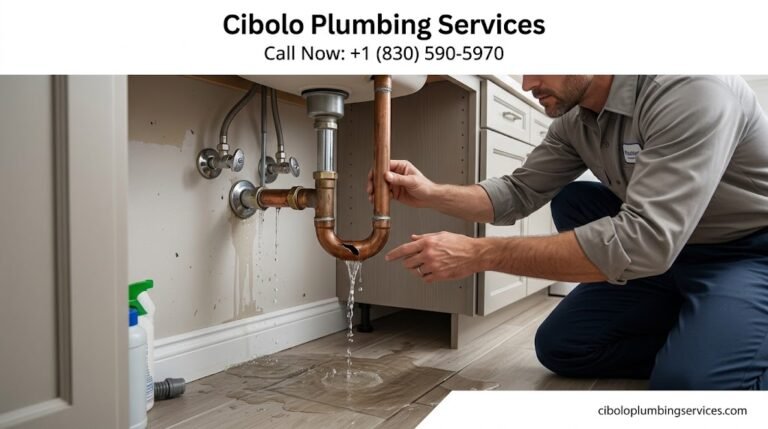
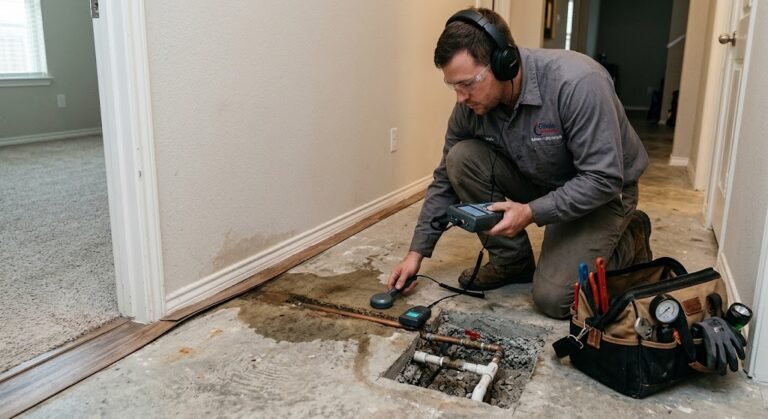
Visible leaks under sinks, around toilets, and at the water heater are checked directly. Hidden leaks are harder — those often show up as water stains, damp drywall, or an unexplained rise in the water bill, and may need more targeted diagnostics.
Water Heater Condition
The inspector looks at the age, the T&P valve, any signs of corrosion on the tank, the condition of the fittings, and whether there is moisture at the base. If the unit is aging or showing symptoms, the decision between repair and replacement is discussed.
Visible Pipe Condition
Exposed supply and drain lines in garages, utility areas, and basements are checked for corrosion, discoloration, and support. Green or white crust on copper, rust on steel, and flaking on any pipe are the kinds of early signs that are easier to address before a break.
Shutoff Valves
The main shutoff and the individual shutoffs under sinks and behind toilets are checked. Valves that no longer turn, drip when operated, or feel stuck are a common find, and they matter when you need to stop water in a hurry.
Drains and Fixtures
Drains are checked for slow flow, gurgling, and odors. Faucets, toilets, and the fixtures in bathrooms and the kitchen are looked at for leaks, running water, and worn parts. Fixture-level issues are often small and inexpensive at this stage.
Outdoor and Exterior Plumbing
Hose bibs, irrigation connections, and any visible outdoor piping are checked, especially before or after a freeze. Outdoor plumbing is more exposed to temperature swings and is a common location for winter damage.
Toilets and Flappers
A running toilet is one of the most common causes of a high water bill. The inspection includes checking the flapper, fill valve, and water level. This is a small, easy repair when caught early — and an ongoing waste of water when it is not.
Water Quality Indicators
Rusty or cloudy hot water, unusual taste, and discoloration at fixtures are noted. These can point to corrosion inside the tank, aging piping, or a treatment system that needs service. Water quality is not diagnosed in the inspection, but indicators are flagged for follow-up.
An Inspection Is Not the Same as an Emergency Call
A plumbing inspection is planned maintenance. It is not the right service for an active leak, a burst pipe, a sewage backup, or water where it should not be. If you are dealing with an active problem right now, the emergency plumbing service is the correct path.
Signs You Should Not Wait for the Schedule
A regular inspection schedule is helpful, but some signs mean the schedule should be moved up. If you are seeing any of these, an inspection sooner is worth considering.
- ✓ Water bill jumped with no usage changeA slow leak that has not reached the surface still shows up on the meter and the bill.
- ✓ Water meter moves with everything offThis is one of the clearest signs that water is escaping somewhere in the system.
- ✓ Damp spots, stains, or soft drywallMoisture coming through a wall or ceiling usually means a leak above or behind it.
- ✓ Musty smell with no obvious sourceA persistent damp odor indoors can point to a slow leak that has been wet for a while.
- ✓ Water pressure that has droppedPressure loss across the house can indicate a supply-side restriction or a hidden leak.
- ✓ Hot water that runs out faster than it used toThis is often an early sign that the water heater is losing capacity.
- ✓ Rusty or discolored hot waterRust in hot water is a strong indicator of corrosion inside the tank or piping.
- ✓ Multiple slow drains at onceSeveral slow drains can point to a main line or sewer issue rather than a single clog.
- ✓ Gurgling sounds from drains or toiletsGurgling often indicates a venting or drain issue that could worsen over time.
- ✓ You just bought the homeA first inspection after purchase establishes a baseline for the property.
- ✓ It has been several years since the last oneIf you cannot remember when the plumbing was last looked at, that is a reason on its own.
- ✓ A recent freeze, flood, or renovationEvents that stress the system are worth a follow-up inspection.
Related reading: the article on water heater repair or replacement walks through the signs that a unit is nearing the end of its life — a common finding during a routine inspection on an aging home.
How a Plumbing Inspection Usually Runs
A typical residential inspection takes about an hour to two hours, depending on the size of the home and how much is accessible. Here is what happens, step by step.
- 1 Walkthrough and conversation The inspector asks about any known issues — slow drains, past leaks, water heater age, recent repairs — and any concerns you have noticed. That context shapes where to look.
- 2 Pressure and flow testing Pressure is checked at multiple fixtures, and flow is compared between hot and cold and between different parts of the home. This is where pressure-related issues usually show up first.
- 3 Fixture-by-fixture check Faucets, toilets, showers, and the kitchen sink are checked for leaks, running water, and worn parts. Under-sink areas are inspected for moisture and past water damage.
- 4 Water heater review Age, visible condition, fittings, and the T&P valve are checked. Moisture at the base or signs of tank corrosion are noted for discussion.
- 5 Drain and sewer observations Drains are run to check flow and listen for gurgling. If a sewer issue is suspected, a camera inspection may be recommended as a follow-up step.
- 6 Exposed pipe and valve check Visible piping and shutoff valves in garages, utility areas, and basements are inspected for corrosion and condition. Main shutoff function is verified if accessible.
- 7 Summary and recommendations Findings are reviewed with you. Items are usually grouped into what needs attention now, what should be watched, and what is in good condition. Questions are welcome at this stage.
What a Homeowner Should Not Try to Inspect
Some parts of the plumbing system can be safely checked by a homeowner as part of routine care. Others should be left to a professional, either because of safety or because the tools and knowledge required are beyond what a visual check can provide.
Gas Lines and Gas Water Heaters
Do not open burner compartments, check gas connections, or attempt to test for gas leaks. If you smell gas, leave the area and contact your gas utility or emergency services first.
Electrical Components in the Water Heater
Heating elements, thermostats, and wiring inside an electric water heater carry voltage and can retain a charge. These are not parts to probe or test without proper training and equipment.
Sewer and Drain Lines
Camera inspections and drain testing require specialized equipment. Putting a camera or tool down a drain without the right setup risks damage and provides no reliable information.
Slab-Embedded Piping
Piping under a slab cannot be visually inspected. Leak detection and pressure testing are needed, and those are professional diagnostic services.
The T&P Valve
Do not cap, plug, or modify the temperature and pressure relief valve. It is a safety device, and it must stay operable. A dripping valve is a repair call, not a DIY fix.
Anything Behind Walls
Cutting into drywall to look for a leak without knowing where to look causes damage and rarely finds the source. Hidden leaks are usually located with equipment, not guesswork.
Why Frequency Matters in Cibolo and Nearby Areas
Homes in this region deal with a specific combination of conditions that affect plumbing over time. Mineral content in the water leaves deposits inside fixtures and water heaters. The clay-heavy soil that is common here expands and contracts with wet and dry cycles, and that movement can stress buried service lines and slab-embedded piping. Occasional hard freezes add another layer of risk, especially for plumbing in garages, attics, and along exterior walls.
None of this means every home needs constant attention. It does mean that the interval between inspections matters more here than in regions with milder conditions and softer water. A home that would be fine with a check every three years in another part of the country may benefit from a closer interval in this area.
For properties that are rented or managed on behalf of owners, a yearly inspection is usually worth the cost. It provides documentation of the plumbing's condition, catches small issues before they become tenant complaints, and helps with planning for eventual replacements. The areas we serve page explains how local requests are handled for Cibolo and nearby communities.
Cibolo, TX
Primary Service AreaPlumbing inspection requests and local service information for Cibolo homes and nearby properties.
View ServicesPlumbing Inspection FAQs
Common questions from Cibolo homeowners about scheduling and scope.
Not for every home. A newer home with no history of issues is usually fine with an inspection every two to three years. Yearly inspections make more sense for older homes, homes with galvanized piping, rental properties, and homes that have had prior problems. The schedule should match the property, not a one-size rule.
A home inspection gives a general overview of the property and flags visible concerns across all systems. A plumbing inspection goes deeper into the plumbing specifically — pressure testing, water heater condition, fixture checks, and observations that a general home inspector does not typically perform. The two serve different purposes and can be complementary.
Soon after moving in is a good time. It establishes a baseline for the property, documents the condition of the major components, and identifies anything that should be addressed before it becomes a larger issue. If the home is older or the inspection report flagged plumbing concerns, having a plumber look at it in the first few weeks is usually worthwhile.
Not usually as part of a standard inspection. A sewer camera inspection is a separate service that is used when there is a reason to look inside the sewer line — recurring backups, slow drains throughout the house, or a property with mature trees near the line. It is often recommended as a follow-up rather than included by default.
A typical single-family home inspection takes about one to two hours. Larger homes, homes with multiple water heaters, or properties with known issues may take longer. Inspections that include a sewer camera add time on top of the standard walkthrough.
No inspection can find every possible issue, especially problems that are hidden inside walls or under a slab. What an inspection does well is catch visible wear, testable conditions, and early warning signs. It reduces the chance that a small problem will turn into an emergency, but it is not a guarantee that no future issue will develop.
That is exactly when an inspection is most useful. Plumbing problems usually start small and quiet. A slow leak, a weakening valve, or early corrosion does not affect daily use until it suddenly does. An inspection while things are working normally is how you catch those issues on your terms rather than during an emergency.
You can send a request through the Contact Us page, or call (830) 590-5970. It helps to mention the age of the home, whether any plumbing has been updated, and anything you have noticed recently. You can also review the FAQs for more general plumbing questions, or read more articles on the plumbing blog.
Not Sure When Your Home Was Last Inspected?
If you cannot remember the last time the plumbing was checked, or if the home is older and has never had a full review, an inspection is a reasonable next step. It gives you a clear picture of the system and a plan for what, if anything, needs attention.
Explore Cibolo Plumbing Services
Additional pages that explain how this website and its services work.
Plumbing Services
Browse the main plumbing service categories available for Cibolo properties.
Emergency Plumbing in Cibolo, TX
What to do when a pipe breaks, and how to respond before help arrives.
Water Heater Repair or Replacement
Learn how to decide whether a water heater should be repaired or replaced.
Low Water Pressure in Cibolo
Read about common causes of weak water flow in Cibolo homes.
Areas We Serve
Review the primary service area and applicable local coverage information.
Contact Us
Submit a plumbing service request or contact us with a question.