Emergency Plumbing in Cibolo, TX
Emergency Plumbing Services in Cibolo, TX: What to Do When a Pipe Breaks
A broken pipe is one of the few plumbing problems that gets worse by the minute. Water can soak into drywall, run under flooring, and reach electrical components before you have time to think about it. The first few minutes matter more than anything else.
This guide covers what to do the moment you realize a pipe has failed, how to shut the water off safely, which signs point to a hidden break, and what to expect when you call for emergency plumbing help in the Cibolo area.
The First Five Minutes
When a pipe breaks, the goal is simple: stop the water, protect people, and limit damage. Everything else can wait until the water is off.
- Shut off the main water valve. It is usually near the water meter, at the side of the house, or in an outdoor box. Turning it clockwise stops water from entering the home.
- Turn off electricity to wet areas if it is safe to reach the breaker. If the breaker panel is dry and you can reach it without stepping in water, shut off the affected circuits. If it is wet or you are unsure, leave it and call for help.
- Open a low faucet to drain remaining pressure. A tub or outdoor spigot will help the system empty faster and reduce spray.
- Move valuables, electronics, and furniture away from the water. Rugs, cardboard boxes, and anything sitting on the floor should come up first.
- Call for emergency plumbing help. A broken pipe is not a repair that can wait until morning.
Do not attempt to patch a pressurized pipe with tape, putty, or a clamp while water is still flowing. It does not hold, and it wastes time you could be spending on shutoff and cleanup.
Types of Pipe Breaks and What They Mean
Not every pipe failure looks the same. Where the break happens and how it presents changes what you should do next.
| What You See | Likely Location | Urgency |
|---|---|---|
| Water spraying from a visible pipe | Under a sink, in a garage, or in a utility area | High — shut off water immediately |
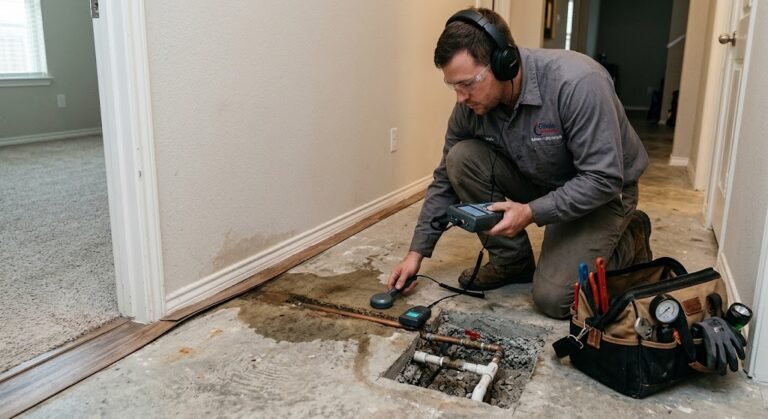
| Water pooling on the floor with no visible source | Inside a wall or under a slab | High — hidden leaks spread quickly |
| Water stain spreading on a ceiling or wall | Pipe above the ceiling or inside the wall | High — ceiling may be holding water |
| Sudden drop in water pressure across the whole house | Main service line or a large supply line | High — likely a significant break |
| Wet spot in the yard that keeps growing | Buried water service line | High — call before digging or walking heavily |
| Water heater leaking from the tank | Water heater unit | High — shut off water and power or gas to the unit |
| Slow drip from a fitting or joint | Anywhere on the supply system | Moderate — may worsen without warning |
| Pipe frozen but not yet split | Attic, exterior wall, or crawlspace | Moderate to high — thaw carefully, do not force |
If you are not sure whether the situation qualifies as an emergency, it is safer to call and describe what you are seeing. You can also review the plumbing services page to see the service categories available.
How to Respond to a Broken Pipe
These steps apply to most residential pipe breaks. Safety comes first — if at any point you feel unsafe, stop and call for professional help.
Shut Off the Main Water Valve
The main shutoff is usually near the water meter or where the service line enters the home. Turn it clockwise until it stops. If you have never located it before, this is worth doing today — knowing where it is before an emergency saves time and damage.
Cut Power to Wet Areas
Water and electricity do not mix. If the breaker panel is dry and reachable without stepping in water, shut off the circuits for affected rooms. If the panel is wet, if you are standing in water, or if you are unsure, leave it alone and wait for help.
Drain the Remaining Pressure
After the main valve is closed, open a low faucet — a tub or an outdoor spigot works well. This releases water still sitting in the pipes and reduces spray from the break. Do not open the highest faucet first; you want water to drain downward.
Contain and Move What You Can
Towels, buckets, and plastic sheeting can slow the spread on hard floors. Move rugs, electronics, and furniture off the wet area. If the water is near a wall, remove anything leaning against it so moisture does not wick upward.
Take Photos Before Cleanup
Before you start drying things out, take a few photos and a short video of the damage. This is helpful for insurance claims and for the plumber who will assess the repair. Do not remove damaged drywall or flooring before documenting it.
Call for Emergency Plumbing Help
Once the water is off and people are safe, call a plumber and describe what happened. Mention whether the water is clean or dirty, whether the break is visible, and whether you have been able to shut off the main valve. That information helps determine the right response.
If You Cannot Find the Main Shutoff, Call Now
Water escaping from a broken pipe can travel into walls, floors, and ceilings within minutes. If the main valve will not turn, if you cannot locate it, or if the break is somewhere you cannot reach, get help on the phone before doing anything else.
Why Pipes Break in Cibolo Homes
Pipe failures almost always come down to one of a handful of causes. Knowing which one fits your situation helps a plumber plan the repair before arriving.
- ✓ Freezing temperaturesWater expands as it freezes. A hard freeze can split copper, PEX, or PVC pipe overnight, and the leak often shows up when the pipe thaws.
- ✓ Corrosion in older pipesGalvanized steel and older copper lines thin out over decades. Eventually the wall of the pipe fails under normal household pressure.
- ✓ High water pressurePressure above what the system is rated for stresses joints, fittings, and the pipe itself. A failing pressure regulator can push pressure too high without warning.
- ✓ Water hammerThat banging sound when a valve closes quickly is water hammer. Over time it loosens fittings and can crack pipe at joints.
- ✓ Ground shiftingExpansive clay soils common in this region move with wet and dry cycles. That movement can stress buried water lines and slab-embedded pipe.
- ✓ Tree rootsRoots seek moisture and can wrap around or crush buried supply and sewer lines, especially in older yards with mature trees.
- ✓ Poor installation or repairsA joint that was not properly soldered, crimped, or tightened can fail years later, often at the worst possible time.
- ✓ Physical damageNails, screws, and renovation work are common causes of hidden pipe damage. A puncture may drip slowly for months before it becomes visible.
Related reading: if you have noticed weak flow rather than a leak, the article on low water pressure in Cibolo covers the common causes and what to check. If the problem involves hot water only, the guide on water heater repair or replacement explains how to decide between fixing and replacing the unit.
Warning Signs of a Pipe About to Fail
A pipe that is about to break rarely gives no warning. These are the signs that show up before the water starts.
- 1 Unexplained jump in the water bill A leak that has not reached a visible surface still shows up on the meter. If usage has climbed without any change in habits, it is worth investigating.
- 2 Water meter moving with everything off Turn off every fixture in the house and watch the meter. If the dial or digital display is still moving, water is escaping somewhere in the system.
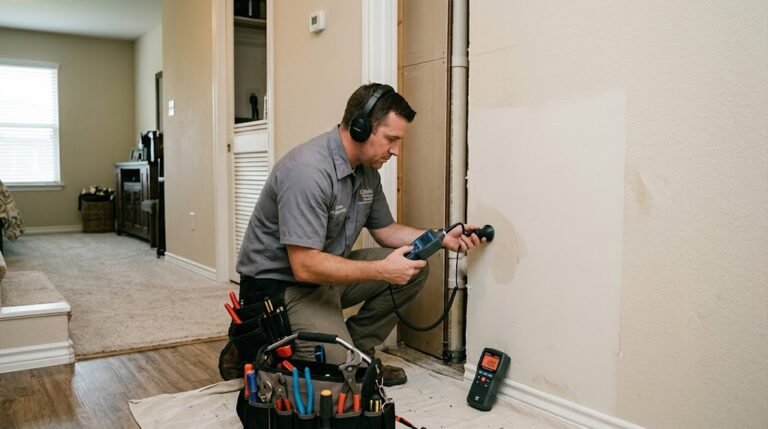
- 3 Damp spots on walls, ceilings, or floors Discoloration, bubbling paint, or a soft spot in drywall often means moisture is coming from a pipe inside the wall or above the ceiling.
- 4 Musty or earthy smell indoors Persistent damp odors with no obvious source can point to a slow leak behind a wall or under a floor that has been wet for a while.
- 5 Sound of running water when nothing is on If you hear water moving through the pipes with no fixtures running, a leak is likely. This is common with toilet flappers, but it can also indicate a pipe leak.
- 6 Visible corrosion or discoloration on pipe Green or white crust on copper, rust on steel, or flaking on any pipe is a sign the pipe is weakening. A plumber can assess how much life is left.
- 7 Reduced water pressure with no other cause A restriction or leak upstream can reduce flow to the whole house. If pressure dropped suddenly, treat it as a possible break.
What Not to Do During a Pipe Emergency
In an emergency, the instinct is to do something. But a few common reactions can make the situation more dangerous or more expensive. These are the ones to avoid.
Do Not Step Into Standing Water Near Outlets
If water is anywhere near electrical outlets, appliances, or a panel, stay out of it. Call for help and wait for direction before entering the area.
Do Not Try to Patch a Pressurized Pipe
Tape, epoxy putty, and hose clamps are not designed for pressurized plumbing. They fail under pressure and waste time. Shut the water off first.
Do Not Use a Torch on a Wet Pipe
Soldering or heating a pipe near water is unsafe, and it can damage surrounding materials. This is not a repair to attempt during an active leak.
Do Not Dig Blindly in the Yard
If you suspect a buried line, do not dig without knowing where gas, electrical, and irrigation lines run. This is a job for a professional with locating equipment.
Do Not Force a Stuck Main Valve
Older gate valves can break if forced. If the valve will not turn with firm hand pressure, stop and call — a broken main valve makes the situation much worse.
Do Not Ignore Sewage Smell or Backups
Water from a drain or sewer line is not clean water. If the leak involves a drain, keep people and pets away from the area and call for help.
Emergency Plumbing in Cibolo and Nearby Communities
Homes in and around Cibolo deal with a specific combination of conditions. The region sees occasional hard freezes, and the clay-heavy soil expands and contracts with wet and dry cycles. Both of those stresses hit buried water lines and slab-embedded pipe over time.
Many homes here also have water heaters, washing machine connections, and hose bibs in garages or on exterior walls. Those spots are more exposed to temperature swings than interior plumbing, which makes them common locations for winter pipe failures.
If your home was built decades ago and still has galvanized steel supply lines, corrosion is a factor worth keeping in mind. When a pipe breaks on older piping, the repair often involves more than just the failed section, and a plumber can assess whether nearby pipe needs attention at the same time.
Cibolo, TX
Primary Service AreaEmergency plumbing requests and local service information for Cibolo homes and nearby properties.
View Service AreasEmergency Pipe Break FAQs
Common questions from Cibolo homeowners dealing with a broken pipe.
In most single-family homes, the main shutoff is either near the water meter at the street, at the point where the service line enters the house, or in an outdoor valve box. Some homes have an interior shutoff as well, often in a garage, utility room, or under a sink. It is worth locating yours before an emergency happens.
Do not force it. Older gate valves can break internally if turned with too much pressure, and a broken main valve makes the situation worse. Call for plumbing help and describe the situation. If there is a secondary shutoff inside the home, you may be able to use that in the meantime.
Once the main valve is off, water will not flow to any fixture in the home. If you have shut off a local valve only — for example, the one under a sink — other fixtures may still work, but the pressure behind the break is still present. The safer choice is to shut off the main until the repair is complete.
A frozen pipe typically produces no water at the affected fixture, and the pipe may feel unusually cold or show frost. A broken pipe produces water where it should not be — a spray, a drip, or a puddle. Freezing often leads to a break, so treat a frozen pipe as a potential break and shut off the water until it can be assessed.
That depends on the extent of the damage and your specific policy. Sudden water damage from a pipe break is often covered, while the pipe repair itself may or may not be. Document the damage with photos before cleanup, keep receipts, and contact your insurer to ask how they want the claim handled. Do not discard damaged materials until you have been told it is okay.
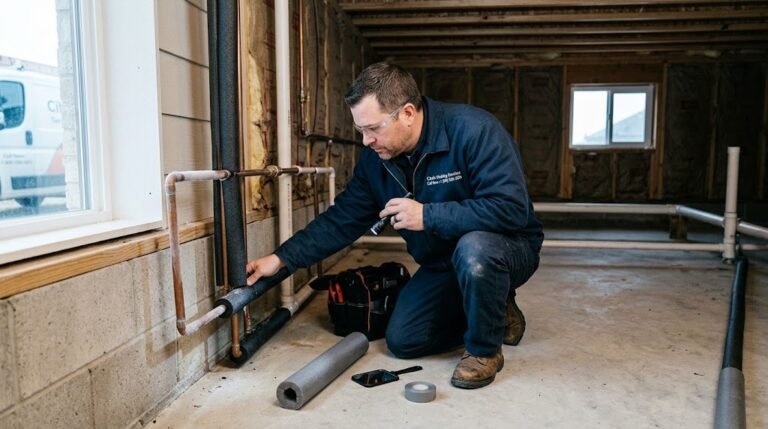
Insulate exposed pipes in garages, attics, and along exterior walls. Disconnect garden hoses before a freeze and cover outdoor spigots. Keep the home above freezing during cold snaps, and if you leave for an extended period in winter, consider shutting off the main and draining the system. Having a plumber check water pressure and the pressure regulator periodically also helps.
Call (830) 590-5970 to describe the situation, or send a request through the Contact Us page. Mention whether the water is shut off, whether the break is visible, and whether any electrical areas are affected. You can also review the FAQs for more general plumbing questions.
Dealing With a Broken Pipe Right Now?
Shut off the main water valve first, then cut power to wet areas if it is safe to reach the breaker. Once the water is stopped, call and describe what happened. Fast action on the shutoff is what limits the damage — the repair itself can follow.
Explore Cibolo Plumbing Services
Additional pages that explain how this website and its services work.
Plumbing Services
Browse the main plumbing service categories available for Cibolo properties.
Water Heater Repair or Replacement
Learn how to decide whether a water heater should be repaired or replaced.
Low Water Pressure in Cibolo
Read about common causes of weak water flow in Cibolo homes.
Areas We Serve
Review the primary service area and applicable local coverage information.
Plumbing Blog
More homeowner-focused articles on common plumbing questions and problems.
Contact Us
Submit a plumbing service request or contact us with a question.